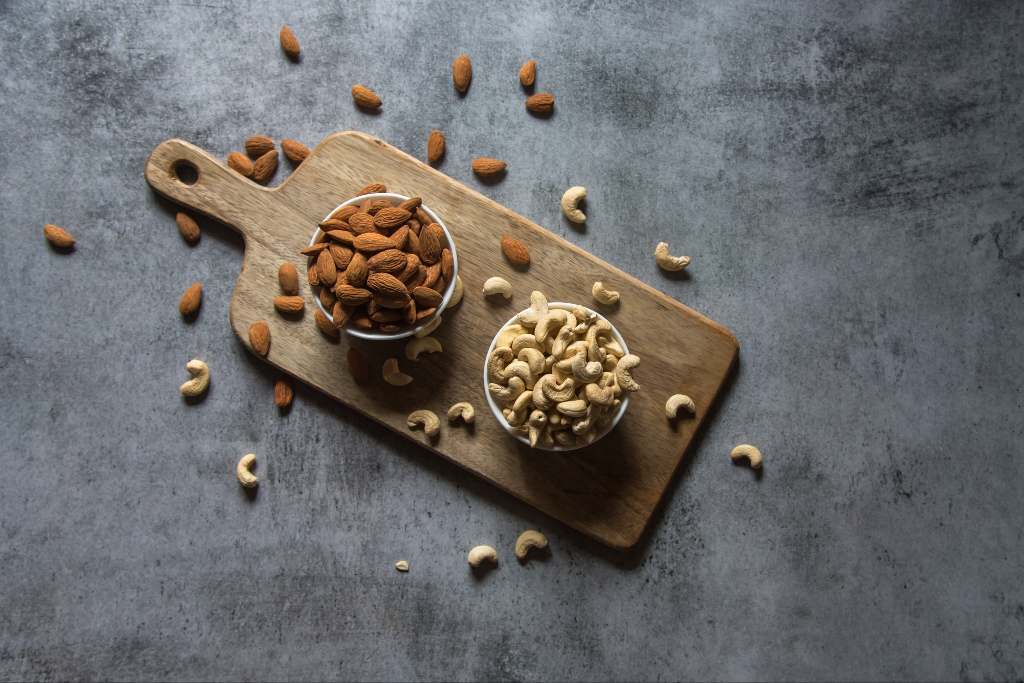
Cashew Butter vs Almond Butter: A Formulator’s Comparison
Cashew butter and almond butter sit close enough on paper that developers sometimes treat them as interchangeable, yet the two behave differently the moment a formula reaches the line. The cashew butter vs almond butter decision shapes texture, color, label claims, and ingredient cost before a pilot batch runs, and the right call changes from product to product. Both are naturally peanut-free tree nut bases from the same family of custom nut butters, and each earns its keep in a different set of applications.
Cashew Butter in Product Formulation
Cashew Butter Composition and Nutrition
A two-tablespoon serving of cashew butter carries about 188 calories, 5.6 grams of protein, and 15.8 grams of fat, including roughly 3 grams of saturated fat. Fiber sits low at around 0.6 grams, and carbohydrates run higher than in most tree nut butters, closer to 9 grams per serving. The extra carbohydrate brings a natural sweetness that lowers the added sugar a recipe needs, and it supports browning in baked applications. Iron and magnesium are the micronutrients worth calling out.
How Cashew Butter Performs on the Line
Cashew butter grinds naturally smooth. The nut’s low fiber and soft structure let the paste come off the mill dense, creamy, and nearly grain-free without extra processing, which is why it anchors premium spreads and dairy-style systems. The color stays a pale ivory that keeps a finished product light, and the mild, sweet flavor recedes behind inclusions instead of competing with them. The trade-off is structural: cashew butter sets softer than almond and binds loosely in a bar unless other ingredients carry part of the load. Oxidative stability runs moderate as well, and longer-dated products sometimes call for antioxidant support.
Almond Butter in Product Formulation
Almond Butter Composition and Nutrition
Almond butter runs about 196 calories per two tablespoons, with 6.7 grams of protein, 18 grams of mostly monounsaturated fat, 3.3 grams of fiber, and 7.8 milligrams of vitamin E. The nutrition panel carries the selling point. Fiber lands more than five times higher than in cashew butter, vitamin E leads nearly every nut butter on the market, and the saturated fat share stays low, a combination that gives a nutrient-forward product a label story cashew cannot match.
How Almond Butter Performs on the Line
Almond butter is the more adjustable of the two. Grind sets viscosity, from a fine flow that moves through pumps and depositors to a coarse body that suspends inclusions and holds a bar together. Roast level moves the color from pale tan to deep toast and pushes the flavor from mild to nut-forward. The fat profile also resists oxidation well, which supports longer shelf life in high-fat systems. Even a light roast reads toastier than cashew does, and in a delicate base the almond flavor leads rather than hides.
Read: Peanut Butter vs Almond Butter for Food Product Formulations
Cashew Butter vs Almond Butter Comparison Table
The table below puts the almond butter vs cashew butter numbers side by side, drawing on USDA FoodData Central data for plain nut butters; commercial products vary with roast, grind, and any added oil.
| Factor | Cashew Butter | Almond Butter | The Better Option |
| Calories (per 2 tbsp, 32 g) | ~188 | ~196 | Neither; the difference is negligible |
| Protein | ~5.6 g | ~6.7 g | Almond, for protein-forward positioning |
| Fat profile | ~15.8 g, ~3.1 g saturated | ~18 g, mostly monounsaturated | Almond, for heart-health positioning |
| Fiber | ~0.6 g | ~3.3 g | Almond, for fiber and satiety claims |
| Vitamin E | Trace | ~7.8 mg | Almond, for micronutrient callouts |
| Flavor and color | Mild, sweet, pale ivory | Mild to toasty, tan | Cashew, for neutral, light-colored bases |
| Texture and binding | Naturally smooth, softer set | Grind-adjustable, firmer body | Cashew for ultra-smooth systems; almond for bars |
| Shelf stability | Moderate; may need antioxidant support | High; monounsaturated profile resists rancidity | Almond, for longer-dated products |
| Allergen status | Tree nut, naturally peanut-free | Tree nut, naturally peanut-free | Even; both carry a tree nut declaration |
| Supply and cost | Imported crop, pricing moves with trade conditions | California-grown, steadier domestic supply | Almond, for budget stability |
Browse the full multi-nut breakdown behind the numbers above:
Read: Nutrition Comparison of Almonds, Cashews and Other Nuts for Formulation
Which Nut Butter Wins for Each Application
Bars belong to almond butter: the firmer set and coarse-grind option hold oats and inclusions in place, and the protein and fiber numbers strengthen the panel a bar lives on. Jarred spreads can go either way. Cashew wins where the eating experience leads, since its dense, naturally smooth body feels indulgent at room temperature, while almond wins where the label leads.
Baked goods lean almond for structure and moisture control, though cashew belongs in fillings and frostings where a pale color and dairy-like richness matter. Frozen desserts favor cashew, whose smooth, low-fiber paste blends into a base without grain and holds its creaminess at freezer temperatures. Plenty of product lines end up running both, one as the flagship base and the other as a texture or flavor variant, and from that base the grind, roast, and inclusion choices build a nut butter that stands out on the shelf.
Source Cashew Butter and Almond Butter From JSS Almonds
The comparison stops being theoretical once samples are on the bench, and the fastest way to settle it is to run both butters in your actual formula. At JSS Almonds, we produce cashew butter and almond butter in the same BRCGS AA+ certified, peanut-free facility, and we adjust grind, roast, and texture alongside your team, with minimum order quantities sized for a pilot rather than a warehouse. One supplier across both butters, and six tree nuts in all, keeps a growing product line on a single food-safety standard as it scales.
Request samples of both from our team, or call 661-328-5755, and we will match each butter to the product you are building.
Frequently Asked Questions
Is Cashew Butter Healthier Than Almond Butter?
Almond butter carries more protein, more than five times the fiber, and far more vitamin E, with a fat profile weighted toward monounsaturated fat. Cashew butter runs slightly lower in calories and brings more iron than almond butter. For a nutrient-forward product, almond butter supports the stronger label, while cashew butter competes on taste and texture.
Which Is Better for Baking, Cashew Butter or Almond Butter?
Almond butter is the more common baking choice because its firmer body supports structure in cookies, muffins, and fillings, and its grind can be matched to the application. Cashew butter for baking makes sense where a recipe needs a pale color, a softer crumb, or natural sweetness that trims the added sugar line on the label.
Is Cashew Butter More Expensive Than Almond Butter?
Often, yes. Cashews are imported rather than grown domestically at commercial scale, which leaves cashew butter pricing exposed to trade conditions and freight. Almond butter draws on California-grown supply, which tends to hold steadier pricing from year to year. Actual costs still vary with grind, roast, order volume, and packaging format, which makes per-application quotes worth comparing.
Can Cashew and Almond Butter Be Blended in One Formulation?
Yes, and blends are a practical middle path. A cashew base smooths the texture and softens the flavor, while an almond share adds fiber, protein, and structure. Sourcing both from one supplier keeps the blend on a single food-safety certification and simplifies the allergen statement a brand has to stand behind.