How To Build A Clean Label Ingredient List for Bakeries
Bakery customers are paying closer attention to ingredient lists. They want products made with ingredients they recognize, without giving up the flavor, texture, and consistency they expect. For bakers and confectioners, clean label has become part of making products that feel both trustworthy and well made.
In practice, clean label means choosing ingredients that are familiar, functional, and easy to understand. The challenge is keeping formulas simple while still delivering strong performance in mixing, baking, and shelf life.
The goal is not to trim a label for appearances. It is to choose ingredients with purpose, so the product reads clearly and performs the way it should.
What Clean Label Means in Baking
In baking, clean label usually refers to formulas built around recognizable ingredients and a more straightforward ingredient statement. That often means reducing reliance on artificial colors, artificial flavors, and preservatives or processing aids that make the label feel more technical than it needs to be. Food ingredients on labels can include preservatives, emulsifiers, colors, flavors, sweeteners, and other functional components, which is why bakery formulas can become lengthy so quickly.
That does not mean every functional ingredient is a problem. It means bakers are often looking for smarter ways to get structure, moisture retention, tenderness, flavor, and shelf life without stacking too many separate additives into one formula.
Where Bakery Labels Get Complicated
Bakery labels get longer when a formula depends on multiple ingredients to handle specific jobs.
A packaged muffin, cookie, snack cake, or filled pastry may need separate ingredients for preservation, emulsification, softness, dough conditioning, moisture control, and flavor. On the label, that can mean preservatives like calcium propionate or potassium sorbate, emulsifiers such as mono- and diglycerides or lecithin, and added colors or flavors.
Some of those ingredients are necessary. In other cases, a formula becomes more complex because the core ingredients are not doing enough on their own. Clean label formulation shifts the focus from simply removing ingredients to choosing replacements that still deliver the needed performance.
Ingredients That Can Support a Cleaner Bakery Formula
A more balanced clean label approach usually starts with ingredients that can contribute more than one function at a time.
Flours And Foundational Ingredients
The flour system shapes texture, flavor, color, and handling. Traditional wheat flours still do much of the work in many applications, but bakers may also turn to oat flour, whole grain flours, rye, rice flour, or almond flour depending on the product.
These choices influence more than flavor or nutrition. They also affect crumb structure, tenderness, spread, moisture absorption, and overall eating quality. In cookies, tart crusts, tea cakes, and some confections, almond flour can bring richness and a finer texture.
Sweeteners That Do More Than Sweeten
Sweeteners do more than add sweetness. They also shape browning, spread, moisture retention, and texture. Depending on the product target, a formula may use cane sugar, honey, maple syrup, molasses, date ingredients, or fruit-based sweeteners.
No single option is inherently cleaner in every case. What matters is how the sweetener affects both the bake and the label. In some products, the right choice can help create softness, color, or a fuller flavor without adding more components.
Fats And Nut-Based Ingredients
Fat plays a central role in tenderness, mouthfeel, flavor release, and shelf-life perception. Butter, oils, shortening systems, and nut-based ingredients each influence the finished product differently.
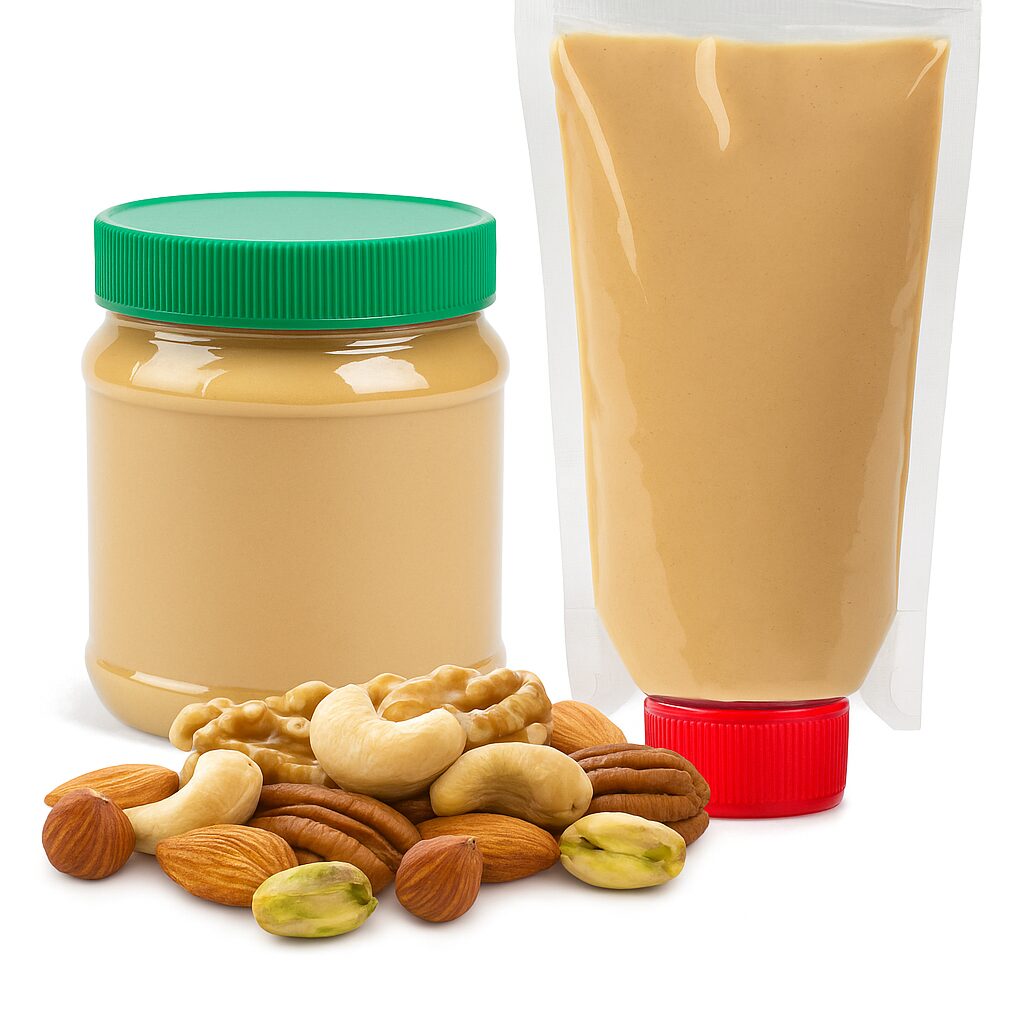
Nut butters can be especially useful in bakery development. In the right application, they can contribute fat, flavor, body, and some binding at once. That makes them a natural fit for bars, fillings, sandwich cookies, baked snack products, and confectionery-style formats.
Eggs, Fruit Ingredients, Starches, And Hydrocolloids
A cleaner bakery formula does not always mean removing functional ingredients altogether. Some products still need support with binding, water management, stability, or viscosity.
That support may come from eggs, fruit purees, starches, pectin, gums, or lecithin, depending on the application. The better approach is to use these ingredients deliberately and avoid building a formula that feels more engineered than necessary.
Inclusions, Spices, Cocoa, And Roasted Ingredients
Flavor development is another place where a formula can often be simplified. Cocoa, cinnamon, vanilla, roasted nuts, seeds, fruit pieces, and spice blends can add depth and distinction without leaning too heavily on artificial flavor systems.
This is especially effective in premium cookies, bars, pastries, granolas, and confections, where visible ingredients and recognizable flavors support both the eating experience and the label.
What Bakeries Should Look for When Building a Cleaner Formula
A cleaner label should still be a production-ready label.
For bakers and confectioners, that means evaluating ingredients against a few practical questions:
- Does the ingredient improve more than one part of the formula?
- Does it help texture, flavor, or handling in a meaningful way?
- Can the product still run consistently at scale?
- Does the ingredient statement stay understandable?
- Can the supplier provide the same performance from batch to batch?
That last point matters more than it sometimes gets credit for. A formula may look clean on paper, but if ingredient variability changes viscosity, spread, moisture, or flavor from lot to lot, the label itself is not solving the real problem.
Clean Label Formulation Works Best with the Right Supply Partner
Clean label only works when the ingredients work in production. For bakeries and confectioners using almond ingredients, nut butters, or nut pastes, consistency affects texture, flavor, handling, and finished product quality.
JSS Almonds supports growing bakery brands with wholesale nuts, almond ingredients and nut butters backed by flexible packaging, smaller minimum order quantities, and custom formulation support. That flexibility is especially useful for teams working through pilot runs, reformulations, retail-ready formats, or scale-up decisions. JSS also offers California almond quality, personalized service, and a tariff-proof supply chain that helps bring more stability to sourcing
Bring Your Next Creation to Life with JSS Almonds
A strong clean label formula does more than look better on an ingredient list. It helps bakeries and confectioners create products that feel thoughtful, well-made, and consistent from one batch to the next.
JSS Almonds supports growing brands with high-quality almond ingredients, flexible production capabilities, and the kind of support that helps move products from development to market with greater confidence. With smaller minimum order quantities, custom formulation support, and a tariff-proof California almond supply, JSS helps bakeries navigate formulation needs while staying ready for growth.
Ready to move your next bakery product from concept to production? Contact JSS Almonds at 661-328-5755 or almonds@jssalmonds.com to learn how their team can support your next formulation.