Nutella Alternatives For Bakery Menus
There is a reason hazelnut chocolate spread has held a permanent spot on bakery menus for decades. It is rich, familiar, and it sells. But if every croissant, crêpe, and filled doughnut on your menu leans on one ingredient, you are also leaning on one supplier, one flavor profile, and one set of cost variables you do not control.
Exploring Nutella alternatives is one of the most practical menu decisions you can make right now, and many of them bring cleaner labels, more interesting flavor dimensions, and better margins depending on your sourcing.
Why Bakeries Are Moving Beyond Hazelnut Chocolate Spread
Hazelnut spreads come with a few built-in friction points that become harder to ignore as your menu scales:
- High sugar content and palm oil that complicate clean-label positioning
- Limited customization flexibility for bakeries wanting a more distinct product
- Import dependency, since hazelnuts are predominantly sourced internationally, tying your costs to trade conditions, regional harvests, and currency shifts
Switching to or supplementing with alternatives does not mean abandoning what works. It means giving yourself room to create products that reflect your bakery’s identity rather than a globally standardized flavor.
Switching to or supplementing with alternatives doesn’t mean abandoning what works. It opens room for products that reflect your bakery’s identity, often with a cleaner ingredient list and a more stable supply line behind them.
The right alternative also gives you something to point to on the menu. “House-made almond praline filling” or “California pistachio paste” reads differently to a customer than a brand name they’ve seen on a grocery shelf since childhood.
Almond Butter
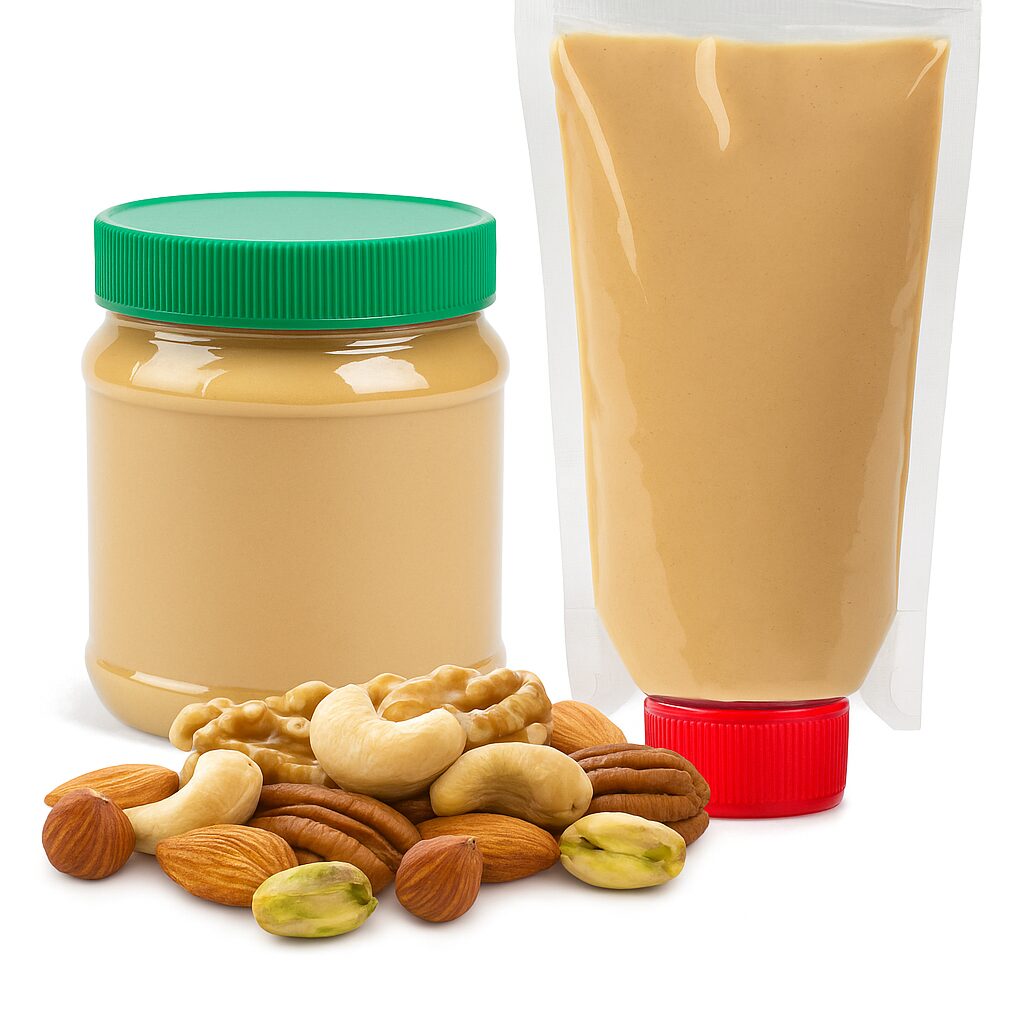
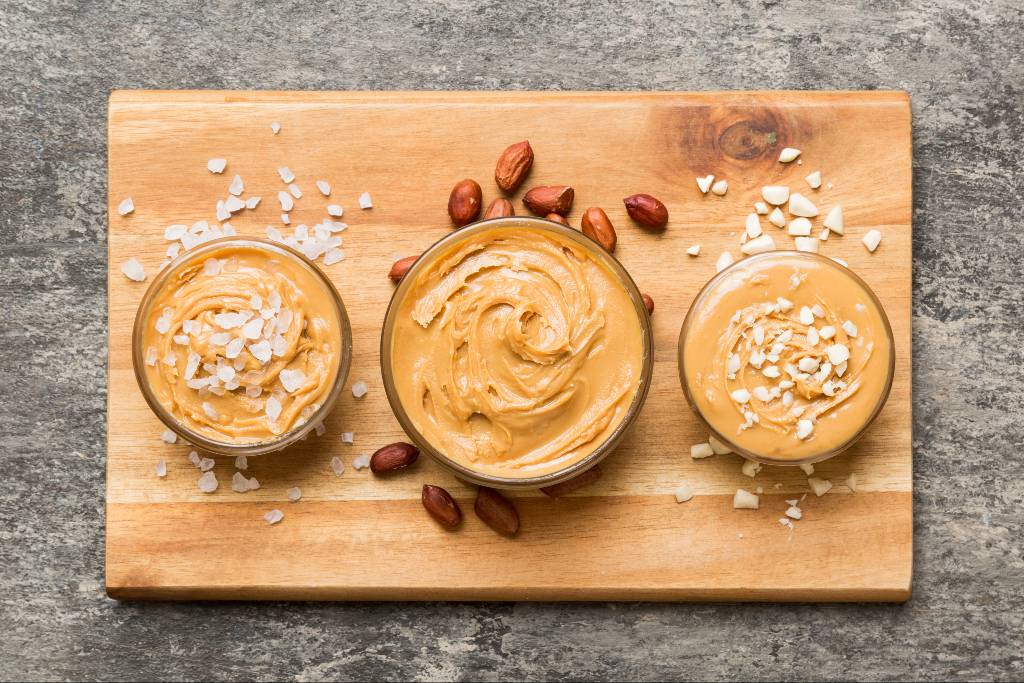
Almond butter is the most versatile starting point for a bakery moving off hazelnut spread. Pure almond butter pairs naturally with chocolate, fruit compotes, and spiced fillings, and it holds up well in both baked and cold preparations. A roasted version brings warmth and depth, while a lightly processed one stays neutral enough for delicate layered pastries. For clean-label positioning, almond butter checks most of the boxes.
Where it fits on a bakery menu:
- Croissant filling paired with dark chocolate or fruit preserve
- Tart shell filling that holds structure at room temperature
- Cookie and bar base that adds moisture and binding
- Toast and flatbread spreads that stay clean and don’t separate
- Vegan-friendly filling for layered or stacked pastries
JSS Almonds produces almond butter and nut butters from California-grown almonds in formulations suited for smaller production runs. That makes it a practical option for bakeries developing a new SKU or scaling an existing one without overcommitting on inventory.
For more on how almond paste and butter behave in baked applications, Read: Almond Paste Uses for Baked Goods, Spreads, and More.
Praline Paste
Praline paste is the closest functional equivalent to hazelnut chocolate spread on this list. Made from caramelized nuts ground into a smooth paste, it delivers a roasted caramel complexity that’s hard to achieve with any single-ingredient nut butter, and it works across bonbons, mousse, mille-feuille, and filled chocolates without needing extra sweetener.
California-grown almonds caramelized into praline carry a clean, buttery sweetness worth building a signature product around. The flavor is closer to a high-end European patisserie than a mass-market spread, which is where most bakeries trying to step up their menu want to land.
Praline paste shines in:
- Filled chocolate bonbons and truffles
- Layered cake and entremet fillings
- Premium croissant and pain au chocolat variants
- Mousse and crémeux bases
- Ice cream and frozen dessert ribbons
Pistachio Paste
Pistachio paste has become one of the most talked-about ingredients in bakery and confection over the past two years, largely driven by the rise of pistachio-filled bars and the Dubai chocolate trend. As a Nutella alternative, it brings a vivid green color, a distinctive nutty richness, and a premium price point that customers will pay for when the application is right.
Pistachio paste works particularly well in:
- Filled croissants and viennoiserie
- Pistachio-cream tarts and éclairs
- Layered bars and confections (including Dubai chocolate)
- Gelato and ice cream swirls
- Macaron and entremet fillings
JSS Almonds supplies California pistachio paste in retail-ready and bulk formats, including the small batch sizes that emerging bakery brands need for pilot runs. If you’re building toward a Dubai chocolate launch or a pistachio-forward seasonal menu, check Pistachio Paste Recipe for Dubai Chocolate for a working application starting point.
Cashew Butter
Cashew butter is the mildest and most neutral option here, which is exactly what makes it useful. Its creamy texture and low bitterness make it an excellent base for flavored spreads, and it takes on vanilla, espresso, cardamom, or citrus zest without competing. For a bakery wanting to build a signature house spread, cashew butter is the canvas.
Common bakery applications:
- Raw cheesecake-style tart fillings
- Vegan frostings and layer cake fillings
- Flavored house spreads for brunch boards and pastry counters
- Flavor-forward dessert dips and accompaniments
- Filled doughnuts with infused flavor profiles
Because cashew butter is neutral, it also works well as a binder in formulations where another nut needs to lead.
Tahini and Seed Butters for Nut-Free Menus
For bakeries running an allergen-restricted menu, or for product lines specifically positioned as nut-free, seed butters are the answer.
Tahini brings a nutty, slightly bitter complexity that plays well against honey, dark chocolate, and caramelized sugar. It works as a swirl in babka, a filling in stuffed buns, and a base for chocolate-tahini spreads. Sunflower seed butter is the closest textural match to peanut butter for school-safe bakeries, and pumpkin seed butter brings minerals and a more savory note for specialty applications.
A few things to keep in mind when working with seed butters:
- Sesame and other seed allergens still require disclosure on menu and packaging
- Tahini’s flavor is bolder than most nut butters and can dominate if not balanced
- Seed butters can separate more aggressively than nut butters, so stabilization matters in shelf-stable products
How to Choose the Right Nutella Alternative for Your Bakery
The right alternative depends on what your menu is trying to do — a premium patisserie has different needs than a grab-and-go café, and a vegan bakery has different needs than a confectioner working with chocolate.
| Alternative | Best For | Label Appeal | Flavor Profile |
|---|---|---|---|
| Almond Butter | Versatile across baked and raw applications | High | Lightly sweet, roasted |
| Praline Paste | Premium patisserie, filled pastries and confections | High | Rich, caramel-forward |
| Pistachio Paste | Premium bakery, Dubai chocolate, seasonal menus | High | Distinctive, nutty, vivid color |
| Cashew Butter | Neutral base for flavored house spreads | High | Mild, creamy, neutral |
| Tahini / Seed Butters | Nut-free and allergen-restricted menus | Medium-High | Earthy, bold, varies by seed |
A few practical filters to apply when narrowing down:
- Flavor lead. Does the alternative need to carry the product (praline, pistachio) or support it (almond, cashew)?
- Label story. What does the back label need to say, and what does the menu description promise?
- Application format. Spreads, fillings, swirls, and bases all behave differently — texture and fat content matter.
- Supply stability. Domestic ingredients with predictable pricing matter more when a single SKU drives meaningful menu revenue.
What Quality Ingredients Bring to a Bakery Formulation
The alternative you choose matters, but so does the quality of the ingredient behind it. A nut butter or paste made from inconsistently processed nuts will show up in the finished product through flat flavor, gritty texture, or shortened shelf life. Our California almonds are recognized globally for their consistent moisture content and clean flavor, translating into pastes that perform predictably batch after batch.
The origin of your ingredients also supports clean-label claims you can make with confidence. “Made with California almonds” is specific and verifiable, and that kind of transparency is increasingly what separates a premium product from a generic one at the counter.
Build Your Next Bakery Product With JSS Almonds
We are a California-based, family-owned almond ingredient manufacturer specializing in nut butters and pastes across a range of nut varieties. We work directly with growing food businesses, offering smaller minimum order quantities, custom formulation support, and retail-ready packaging in formats built for both in-store and direct-to-consumer channels. Our California almond supply is also tariff-proof, giving smaller operations the same pricing stability that larger buyers count on.
Ready to move your next bakery product from concept to production? Check our full range of nut products and Contact us at 661-328-5755 or almonds@jssalmonds.com to find out how our team can support your next formulation.